
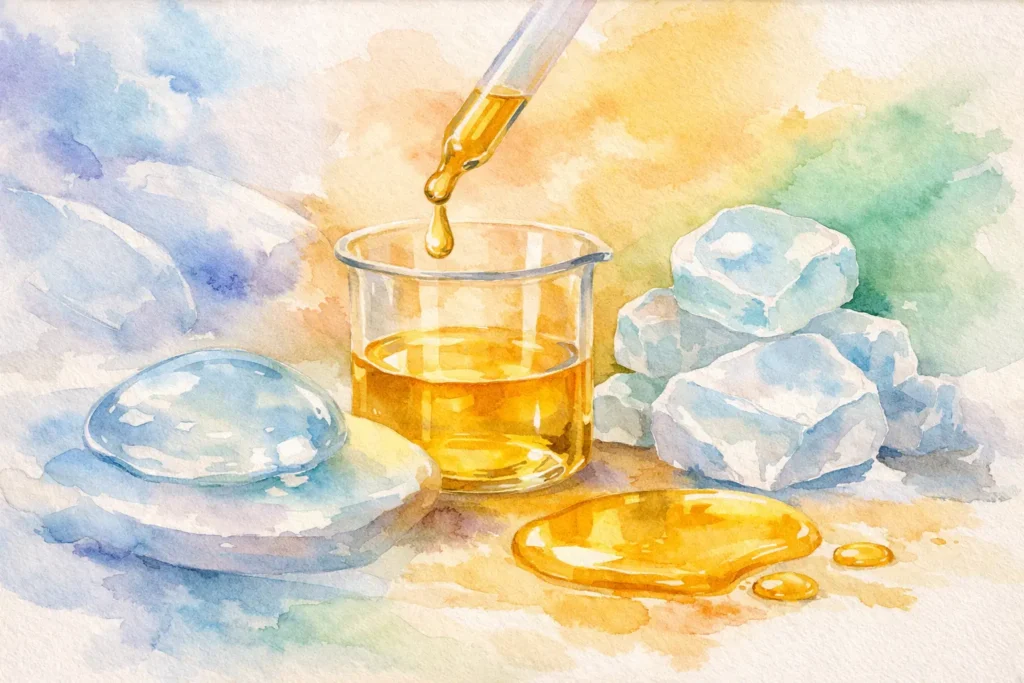
If you are comparing scar treatments and asking, is silicone an oil based product, you are asking the right question. That distinction matters when a product is going on healing skin, recent surgical scars, acne marks, or burn areas where performance, consistency, and purity all count. Silicone and oil can feel similar in some formulas, but they are not the same material, and that difference affects how a scar gel behaves on the skin.
Is silicone an oil based product in scar care?
No. Silicone is not an oil based product in the usual cosmetic or pharmaceutical sense. Silicone is a synthetic polymer built from silicon, oxygen, and other elements, while oils are typically carbon-based lipids derived from plants, minerals, or petroleum sources.
That is the short answer. The more useful answer is that silicone can have a smooth, slippery feel that makes people assume it is an oil. In scar care, that confusion happens often because silicone gels spread easily, create a thin protective layer, and leave skin feeling soft. Those properties can resemble an oil, but the chemistry and performance profile are different.
For buyers who want dependable scar management, this matters because silicone is widely used for a specific reason. It forms a breathable, flexible barrier over the scar surface. Oils may moisturize, but they do not work the same way and are not generally considered equivalent to medical-grade silicone scar therapy.
Why silicone gets confused with oil
Silicone can feel slick. It can reduce drag on the skin. It can also leave a satiny finish, especially in topical products. Those sensory traits overlap with what people expect from oil-based products, so the assumption is understandable.
But feel is not chemistry. A silicone scar gel is designed to dry into a controlled film rather than sit on the skin as a greasy coating. That film helps support hydration balance at the scar site. In quality-controlled scar products, the goal is not just softness. The goal is consistent coverage, predictable wear, and a clean finish suitable for repeated daily use.
This is one reason serious buyers, clinics, and informed consumers do not stop at texture. They check ingredient function, manufacturing standards, and sourcing reliability. A product that feels elegant is not necessarily oil based, and a product that claims scar support should be judged by more than surface feel.
What silicone actually is
Silicone is a manufactured material made from siloxane chains. In practical skincare terms, it is valued because it is stable, flexible, and capable of forming a light barrier on the skin. That barrier can help protect the scar area while maintaining an environment that supports a flatter, softer, less noticeable scar over time.
Not all silicones are used the same way. Some are volatile and evaporate quickly. Others stay on the skin longer and contribute to film formation. In scar gels, the formula matters because the product needs to spread evenly, dry properly, and remain comfortable enough for daily compliance.
That is where verified product quality becomes important. When a scar gel is batch-consistent and produced under controlled standards, users get a more reliable experience from one tube to the next. For anyone treating visible scars, reliability is not a small detail. It is part of the treatment decision.
How oils differ from silicone
Oils are generally used to soften skin, reduce dryness, and improve slip. They may be natural, like coconut or jojoba oil, or refined from other sources. They can be beneficial in some skin care settings, but they do not automatically offer the same film-forming behavior that silicone provides.
An oil-based product usually contains oils as the main vehicle or base. That often means a richer, greasier feel and a different wear pattern on the skin. Some oils absorb quickly, while others remain noticeably oily for longer. On healing or sensitive scar tissue, that may or may not be ideal depending on the formulation, the user, and the care goal.
Silicone-based scar gels are typically chosen because they are built for scar management first. Oils are more commonly chosen for general moisturization. That does not make oils bad. It simply means they are not interchangeable with silicone scar products.
Why the difference matters for scars
Scar care is not just about putting something on the skin. It is about using a material that supports the right surface conditions over time. Silicone is well known in scar management because it can help normalize hydration and create a protective interface without the heavy residue many users associate with oils.
For post-surgical scars, acne scars, burns, and other marks, consistency matters. A product that is easy to apply, dries well, and stays in place is more likely to be used as directed. If a formula feels greasy, transfers onto clothing, or leaves a heavy film, compliance can drop.
That is one reason silicone-based gels are often preferred by users who want discreet daily treatment. They are designed to fit into regular routines. For ecommerce buyers especially, understanding the category before purchase helps reduce uncertainty and improves confidence in product selection.
Is silicone better than oil?
It depends on the goal. If the goal is general skin softening, some oils can be useful. If the goal is scar management, silicone has a much stronger reputation and a more established role.
That does not mean every silicone product is automatically high quality. Formula quality, manufacturing controls, and authenticity still matter. A poorly made silicone gel can disappoint just as an unsuitable oil can. For that reason, buyers should look beyond broad ingredient labels and focus on product credibility.
A trusted scar care product should offer more than a marketing claim. It should come from a dependable source with strong quality control, verified supply standards, and a consistent finish on the skin. When you are buying for healing skin or procuring for clinic use, product integrity is part of performance.
What to look for in a silicone scar gel
If you are shopping specifically for scar support, look for a silicone-based formula rather than assuming any slick or glossy product will do the same job. Ingredient clarity is a good start, but not the only factor.
Manufacturing quality matters. Batch consistency matters. Supplier reliability matters. For individual buyers, these details reduce the risk of receiving a product that looks legitimate but performs inconsistently. For professional buyers, they support procurement confidence and repeat ordering.
You should also consider the practical side of daily use. Does the gel spread evenly? Does it dry into a thin layer? Can it be used discreetly during the day? Is it suitable for the scar type you are treating? Those are performance questions, not just ingredient questions.
In specialized scar products like Dermatix Ultra, the value is not simply that silicone is present. The value is that the product is designed around scar management, dependable application, and trusted quality standards.
Common misconceptions about silicone and oil
One common mistake is assuming that if a product is not oily, it cannot be protective. Silicone proves otherwise. It can create a functional barrier without behaving like a traditional oil.
Another misconception is that natural oils and silicone do the same thing because both can make skin feel smoother. They can overlap in feel, but not in mechanism. Smoothness is a sensory result. Scar support depends on how the product performs over time on the skin.
Some buyers also assume that oil-free and silicone-free mean the same thing. They do not. A product can be oil-free and still contain silicone. In fact, many silicone-based formulas are specifically valued because they avoid the greasy feel associated with oils.
The practical answer for buyers
So, is silicone an oil based product? No. Silicone is its own category, and that distinction is especially relevant in scar care.
If you are evaluating products for a surgical scar, acne scar, burn mark, or older visible scar, do not judge by texture alone. Check whether the formula is actually silicone-based, whether the product comes from a verified source, and whether the supplier gives you confidence in product authenticity and consistency.
That is the smarter buying standard. In scar management, the right material matters, but so does the trust behind the tube. When you are applying a product day after day, or sourcing it in quantity for professional use, confidence in what you are getting is part of the result.
A good scar gel should feel easy to use, but it should also feel dependable from the first application to the last.